Frank Marshall and the Stories that Endure
Introduction
Some stories are more than entertainment. They shape the way generations see the world.
Date
September 24, 2025
Author
Andrew Trapani
Type
News
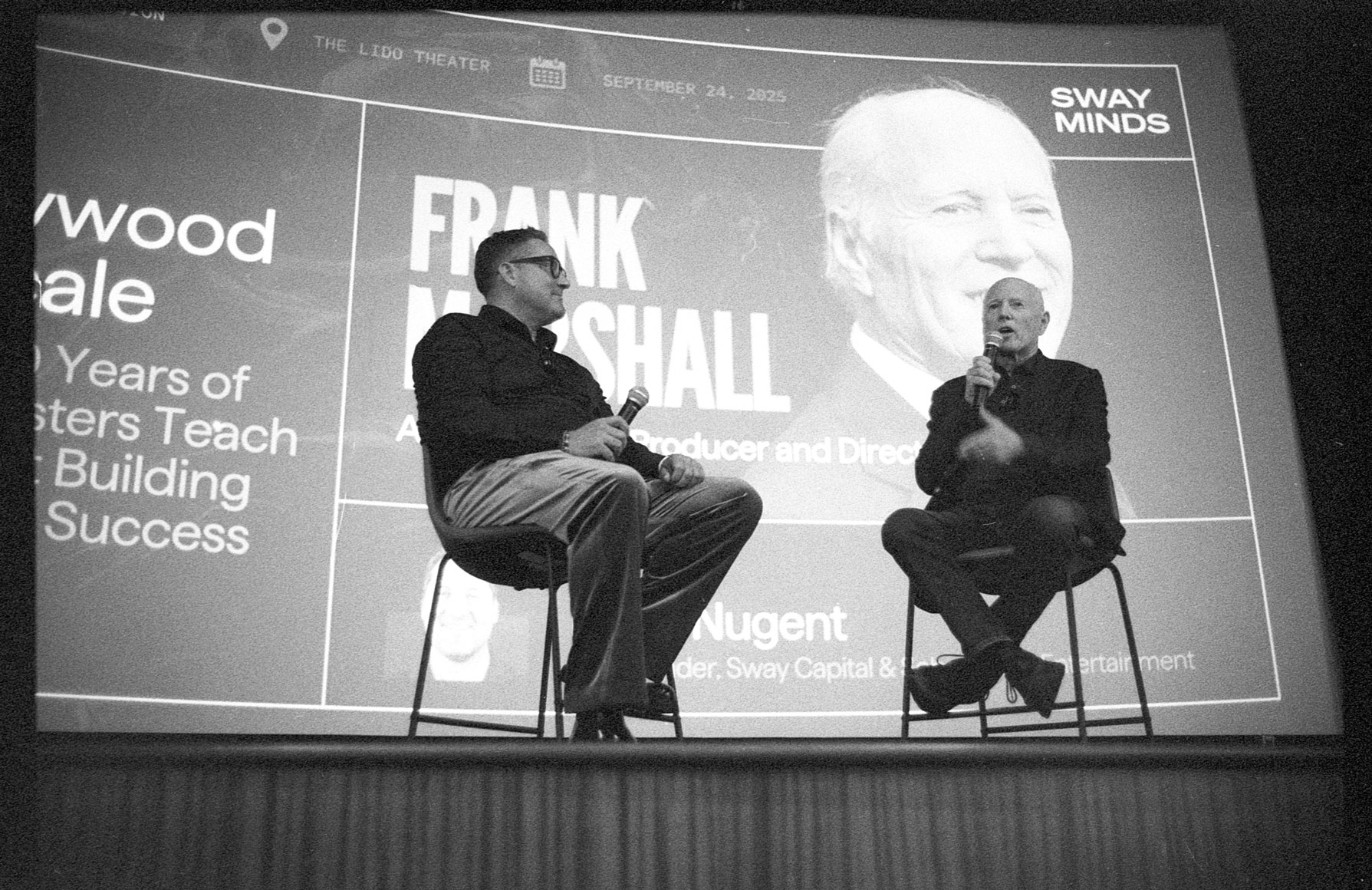
Few filmmakers embody that truth like Frank Marshall, whose five decades of producing have helped define the modern cinematic canon. From Indiana Jones and Back to the Future to Jurassic Park and The Bourne Identity, his films have inspired wonder across generations and cemented their place in cultural history.
At Sway Minds 2025, in the warm glow of the historic Lido Theater, Marshall joined Brian Nugent, Co-Founder of Sobey Road Entertainment, for a conversation on the architecture of enduring stories, creative adaptation, and what it really takes to build cultural icons that last.
The Producer as Architect
Marshall spoke openly about the craft beneath the surface of legendary films. Every great story, he noted, begins with a problem to solve: a script that doesn’t land, a location that seems impossible, a vision that pushes the limits of what’s practical. The role of the producer is to navigate those moments with precision and clarity, turning obstacles into the very things that make a story memorable.
For Marshall, great films aren’t just made — they’re built. Every decision becomes part of the creative DNA. When that foundation is solid, the story endures long after the lights come up.
Collaboration as Power
Storytelling, Marshall reminded the audience, is never a solo act. From early work with Peter Bogdanovich to his decades-long creative partnership with Steven Spielberg, his most iconic moments emerged from teams willing to think bigger, solve harder problems, and take bold creative swings together.
This collaborative philosophy is core to Sobey Road’s own approach: build with visionary partners, protect the story’s heartbeat, and scale cultural impact through trust and shared ambition.
Evolving Without Losing the Heart
Marshall has remained at the forefront of Hollywood through five decades of transformation, from the blockbuster era to the streaming age to the dawn of AI. His perspective is clear: embrace new tools, but never lose sight of the human connection that gives stories their soul.
“Tools change,” he reflected. “The human connection doesn’t.”
It’s a philosophy that mirrors Sobey Road’s belief in pairing narrative vision with next-generation creative and financial models — where enduring storytelling meets scalable opportunity.